
Summary by Philip Amaral & Sara Packull-McCormick
Publication: Descriptive analysis of whole blood concentrations of toxic, essential, and trace elements in adult females from the MIREC-ENDO study. Packull-McCormick S, Ashley-Martin J, Bouchard M, Fisher M, Arbuckle TE, Macey K, Bouchard MF, Foster W, Borghese MM. Environmental Research 2025 Oct 1;282:122095. doi:10.1016/j.envres.2025.122095.
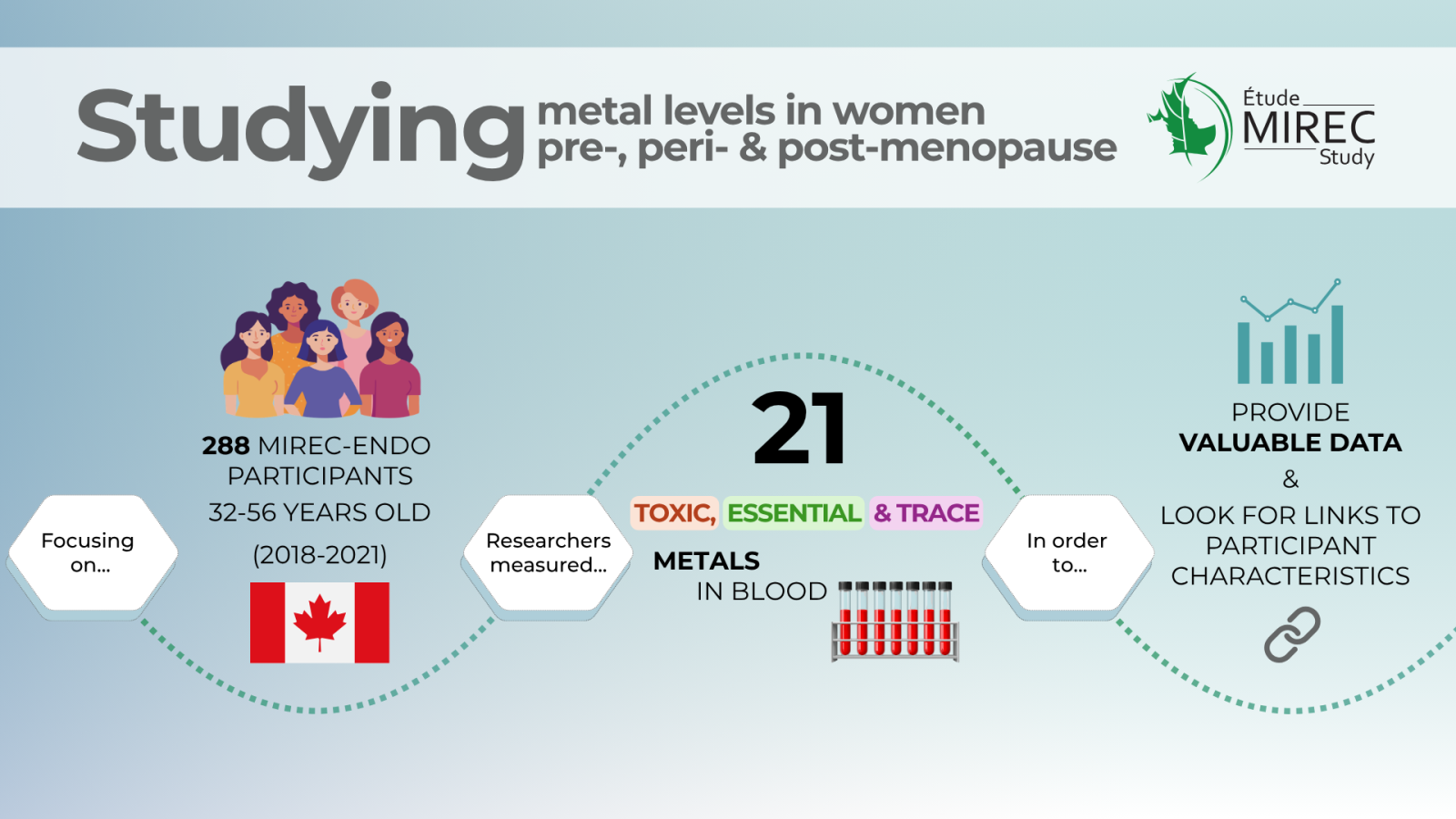
In this study, Health Canada researchers investigated blood levels of metals in adult women enrolled in the MIREC-ENDO study. This research focuses on metal levels in the time period surrounding menopause. Below, lead author Sara Packull-McCormick answers a few questions that explore the significance of this work.

Q: Why study metal levels in women around menopause?
Some metals are considered toxic, and we looked at them because they can have harmful effects at high levels. We also looked at essential elements—the ones that we need to consume to maintain health—and trace elements, which are present in low amounts and not often measured. We wanted to understand levels of these metals in Canadians.
We focused on the period around menopause because it has important implications for women's long-term health, but remains understudied.
Q: What was the main takeaway from this research?
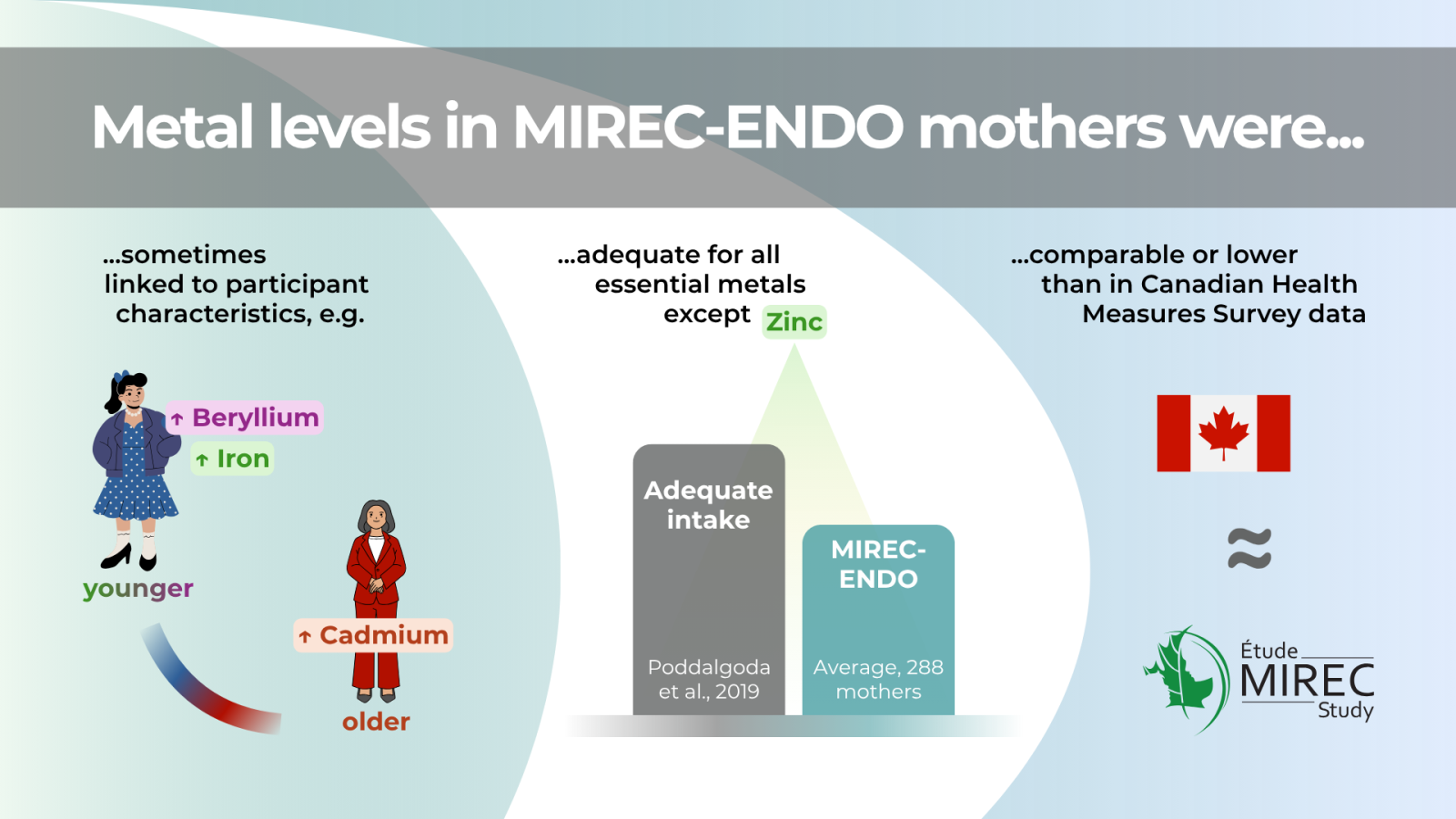
This research helps establish a baseline for a wide range of metal levels in Canadian women, including some of the first data for certain trace metals. MIREC participants had levels similar to or lower than those previously reported in the Canadian Health Measures Survey.
Q: Can you give some examples of the ‘links’ you found?
We found that levels of certain metals seemed to be related; for the toxic metals, the strongest link was between arsenic and mercury. We think that could be explained by the fact that they are both linked to dietary sources like fish and seafood, which are still really healthy, important foods. Some of the essential elements related to blood cell function and production also seemed to be linked to each other.
One thing I personally found really fascinating was that manganese and copper tend to be a bit higher on average in those with a higher body mass index. It could be interesting in the future to explore some questions around that.
Q: Did you find anything else that really stood out?
Interestingly, most of the women had levels of zinc in their blood below the proposed adequate level reported in this publication.
Lead levels also stood out—generally these have been decreasing in Canadians over time due to policy decisions, but what's interesting is that lead can be stored in people's bones long-term. After menopause, when bones are releasing some of their minerals, lead can be released along with calcium. We actually saw higher lead levels in the samples from post-menopausal participants.
Q: Are these numbers a cause for concern?
The good news is that the levels of toxic metals we saw were relatively low. These numbers can highlight the importance of having policies that continue to reduce our risk of exposure.
Q: What’s next for this research?
Future research questions could explore the relationship between the metal levels we measured and health outcomes at a later follow-up. For example, issues with blood pressure and cardiovascular disease are a risk for women after menopause. We are working on another publication looking at these metals and blood pressure.

